

Service Hotline
News

News

Building Gas Sensors from 0 to 1: The 5-Year Journey of Qi Peijun and His Team at Heshun Sensors.
2025-12-05
182
In an industrial park surrounded by greenery in Dapeng New District, Shenzhen, Qi Peijun, founder of Heshun Sensing, brewed tea and said: "'Heshun' comes from the phrase 'Those with shared aspirations do not consider mountains and seas distant'; 'Shun' represents following the trend, not forcing success amidst changing circumstances. We chose this location for our company not only because of the pure environment but also to focus our minds on tackling tough challenges." This entrepreneur from Zhejiang, who started in the chip trade in Huaqiangbei, has spent 5 years leading his team to complete the transition from trade to physical R&D, carving out a path of domestic substitution in this high-tech field long dominated by overseas companies. Recently, the editorial team from Slkor visited Heshun Sensing's factory to hear Mr. Qi share his experiences of overcoming gas sensor technology challenges over these 5 years.
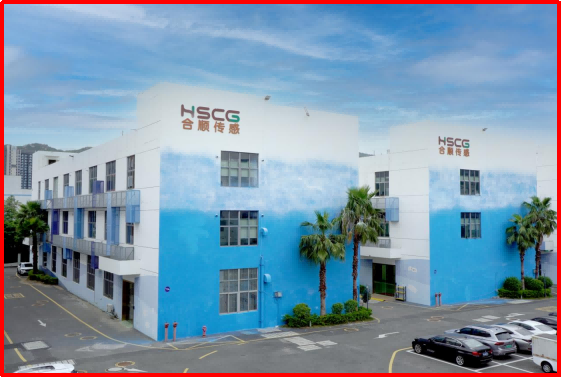
Exterior of the two Heshun Sensing buildings
"I came to Shenzhen in August 2011," Qi Peijun recalled. A native of Cixi, Zhejiang, he brought with him the entrepreneurial genes characteristic of Zhejiang merchants and initially engaged in chip trading in Huaqiangbei. This experience gave him a deep understanding of the electronic components industry and gradually made him aware of the gap between trading and the real economy. "Trading hones operational skills, but the real economy requires more multi-dimensional thinking."
In 2019, he transitioned into the field of gas sensor R&D and founded Heshun Sensing. Speaking about the original intention behind this venture, Qi Peijun stated: "Gas sensors are the 'electronic nose' safeguarding life and safety. This field has high technical barriers, and there's a gap between domestic companies and foreign leading levels. Currently, domestic gas sensors lag behind foreign ones by about thirty years. But we believe that through continuous innovation, Chinese people can also produce world-class products." It is precisely this sense of industrial patriotism that has supported his persistence in this field requiring long-term investment.
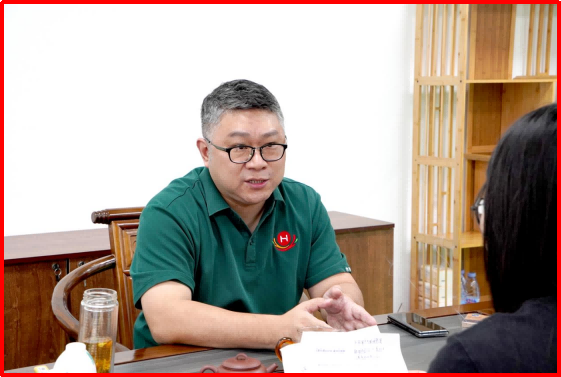
Mr. Qi Peijun, Founder of Heshun Sensing
"The core of gas sensors lies in the materials; this is the industry's biggest technical barrier," Qi Peijun said. Since its establishment, the company has consistently adhered to independent R&D, investing significant resources in the field of sensitive materials. "We've put a lot of effort into the materials end, breaking through many 'bottleneck' technologies. Currently, I believe our electrochemical carbon monoxide sensor can already catch up with Japanese products, and materials for several other types of sensors are expected to see major breakthroughs next year, which should be second to none in China."
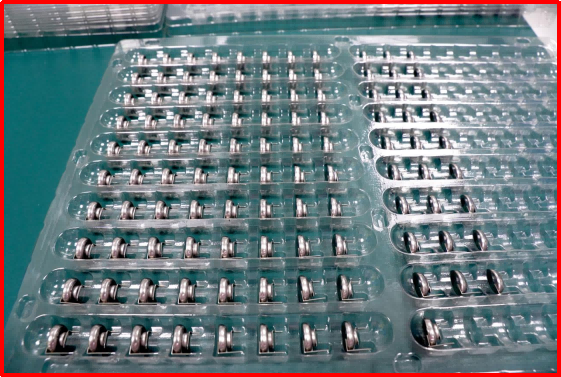
Carbon monoxide sensor after testing
In terms of production processes, Heshun Sensing has established a complete odor control system. "Any potential odor sources, such as nail polish, perfume, hair wax, or even employees wearing makeup, are prohibited from entering the production line. Staff must also wear specific clean outerwear and shoe covers to enter," Qi Peijun explained. "Because gas sensors act as safety shields and are core components in many life-saving tools, the production environment requirements are extremely strict." This stringent standard has been integrated into every detail of daily operations. "We have a concept of being a 'sensor person.' The reception desk is the first checkpoint, needing to screen visitors for makeup, nail polish, perfume, or consumption of strongly odorous foods like mala tang, snail noodles, or hot pot." Through this consistent, strict odor control, Heshun Sensing fundamentally ensures that products are not interfered with by any trace gases during the production process, thereby achieving high product consistency.
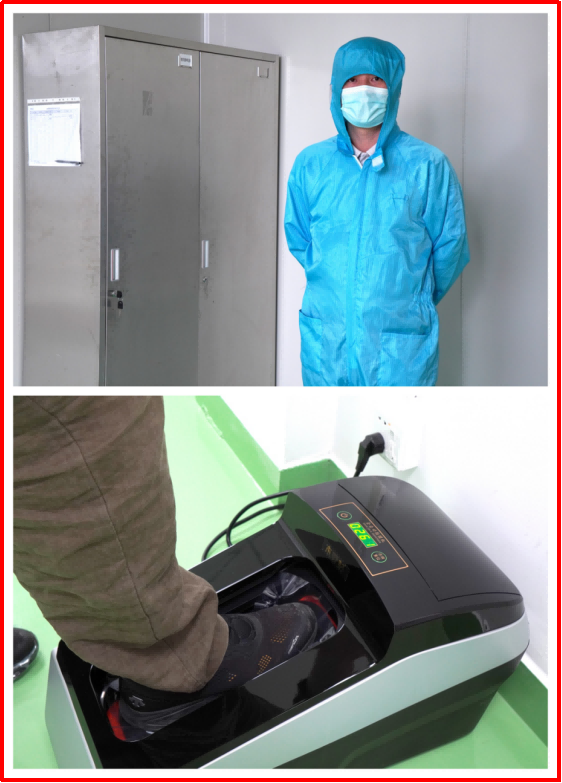
Dressed appropriately before entering the production line
After five years of solid development, Heshun Sensing has achieved significant breakthroughs in domestic substitution across multiple key areas. "Currently, we have the highest domestic market share in carbon monoxide detectors for energy storage and are the only domestic company that can comprehensively replace a certain Japanese brand," Qi Peijun introduced. They also perform excellently in the general small generator market, becoming the sole domestic supplier in that field. Notably, in 2024, the company became the first domestic enterprise to pass both hydrogen and carbon monoxide dual certifications simultaneously. "This means our products have passed national-level certification, proving a major Chinese breakthrough in this track." Behind these achievements are significant advancements made by the team in material technology.
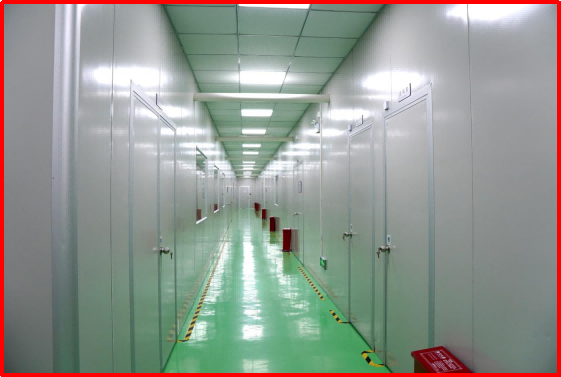
Corridor leading to Heshun Sensing's laboratory and production line
Currently, Heshun Sensing has evolved from its initial single product line to develop over ten gas sensor products covering technologies like catalytic combustion, optical infrared, and electrochemistry. Among them, carbon monoxide, catalytic methane, and planar hydrogen sensors are widely popular with customers. Some products have also entered the supply chains of leading enterprises like CATL and BYD through Tier-1 suppliers. "Our advantage is not just price, but also fast-response technical service. International brands have their technical support overseas, while we can provide more timely localized support," Qi Peijun said.
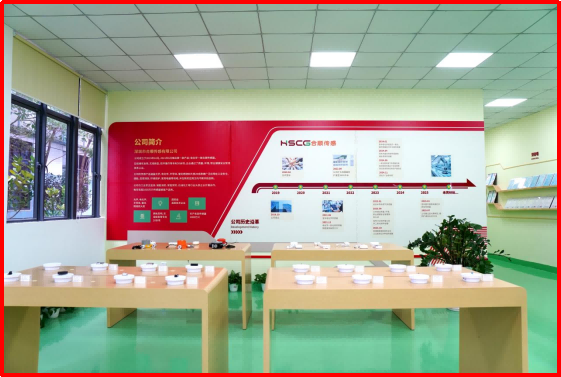
Heshun Sensing product display counter
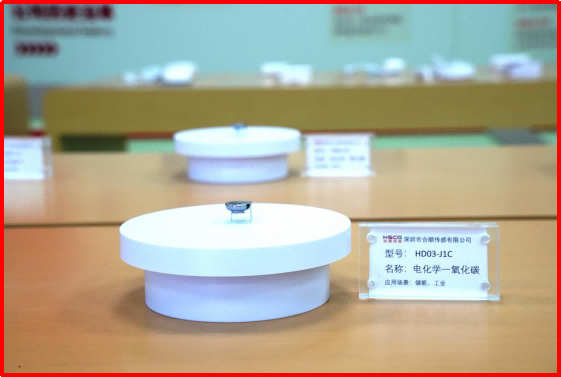
Heshun Sensing - Electrochemical Carbon Monoxide
Facing the gap with international giants, Qi Peijun proposed a clear "three-step" strategy. "The first step, we call it copying the homework well; the second step is getting as close as possible to the original performance; the third step is surpassing it." This pragmatic attitude is also reflected in their R&D approach. "We adopt a path of 'reverse engineering + forward innovation.' We understand the technical principles through reverse engineering, then combine it with domestic market demands for forward adaptation and innovation." Through this strategy, Heshun Sensing has successfully achieved breakthroughs in key areas such as sensitive materials, core formulations, and production processes, ultimately producing gas sensors whose performance rivals international ones and better fits the needs of domestic customers.
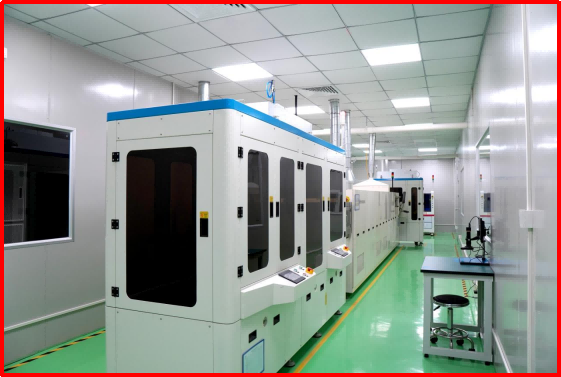
Fully automated production line equipment
Regarding the company's future development, Qi Peijun has a clear layout: "Heshun Sensing must first achieve breakthroughs in materials; secondly, we need to transition from the civilian market to the industrial field; finally, because Chinese companies don't hold a place in the global market on this track, I hope that within five years, Heshun Sensing can occupy over 5% of the global gas sensor market share." At the same time, he also sees broader application prospects: "We are entering the AI era; humanoid robots are a relatively important track, and the 'nose' as a key sensory organ for robots is indispensable—whether it's a household robot identifying burnt food while cooking or a firefighting robot dog detecting lethal toxic gases at a fire scene, all these rely on gas sensor technology."
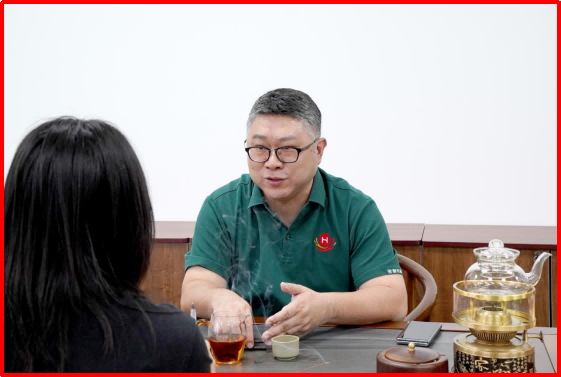
Qi Peijun during the interview
From a chip counter in Huaqiangbei to an industrial park in Dapeng, Shenzhen; from the linear thinking of trade to the multi-dimensional overcoming of physical R&D—Qi Peijun and Heshun Sensing's 5 years are a microcosm of China's hard-tech entrepreneurs. They make no bold boasts but instead progress solidly step by step in materials, processes, and the market. As Qi Peijun said: "We have only taken the first step in import substitution, but this step must be taken steadily and solidly."
Related Recommendations


 粤公网安备44030002007346号